
Personal Branding 101 for Therapists & Coaches

Personal Branding 101 for Coaches, Counselors & Therapists
Who I am and how I got here (the short version).

My name is Jena Thielges (jenna til-jess) a brand and squarespace website designer and the founder of Sundai Studio (sunday studio).
I’m a daughter of entrepreneurs.
A mom to a 5 year old
Originally from western NY state (the finger lakes region) and now live in northern Virginia with my husband Jake and daughter June.
Earned a BFA (bachelor of fine arts) in Graphic Design - drawing, painting and sketching concepts was a huge part of my education and is still integral to how I approach branding as “art” for my clients.
Been working in this field since 2012 and been serving therapists and coaches exclusively since 2019 (7+ years).
I’ve worked with over 300+ brands (including Vanessa’s brand!) and these are the two big things I’ve come to learn:
1. As a coach or therapist, your brand should embody your unique energy.
2. Branding can be done in phases. I’m just as passionate about the person just getting started as I am about supporting the more established entrepreneur.
I’ve pulled this information together to teach you what branding is, how to spot when a rebrand should happen, how to approach it. I built this page to be a resource you can keep coming back to. Let’s dive into how to do it!
QUESTIONS FOR YOU:
Do you already have a business serving clients?
·
Is this ICA work something you hope to integrate into your business and website?
·
How do you feel about your current brand and website (if applicable)?
·
How do you feel about STARTING a new brand and website (if applicable)?

Table of Contents:
Chapter 1: The Overwhelm is Real >
Normalizing the Overwhelm of Branding and all the Tech
When You Should Hold Off on Investing in Branding
Chapter 2: Your Branding >
What is a Brand Exactly?
Personal Brand Examples
My Personal Brand Philosophy: The 70/30 Rule
Designer Approved Font Pairings & Color Combos
How to Find A Brand Designer
Chapter 3: Map Your Customer Flow >
A Marketing Resource: The Customer Flow Worksheet
“Start Here” Instagram Graphics
Chapter 4: Your Website >
FAQs of Web Design
DIY vs Website Templates vs Custom Design Websites
Tips for finding a designer for custom web design
The Website Prep Checklist
Chapter 5: Website Templates & Custom Design from Sundai Studio >
50% Off Coupon for Website Templates
Design Days & Custom Design
FAQs - Ask me anything & Book A Call

Chapter 1: Normalizing the Overwhelm.

The Common “struggles” new business owners face: and what I would tell you on a consult call…
The Common “struggles” new business owners face when creating a brand and website for their business. This is intended to normalize all current fears and feelings. These “struggles” are pulled directly from past client inquiries (keeping names anonymous, of course).
“I’m overwhelmed and don’t know where to start”
“I know what style I like and how I want it to feel but I don’t know how to make it happen”
“I’m overwhelmed by the tech (which platform should I use? Do I need to do instagram? Email marketing?).”
“I don’t know how to nail down my messaging”
“I’m struggling with my target market and niching down”.
“I’m multifaceted and don’t want to pigeon hole myself into one thing (to niche or not to niche).”
“My business is evolving and my current brand doesn’t feel like me anymore, I don’t have the time to DIY” (for more established business owners - Looking at you Vanessa!).
Take Away: NONE of the reasons above should STOP you from moving forward with a brand and website build.
The brand and website process actually brings a lot of clarity to these things.
Here’s what should stop you though….
A note of caution: When you should actually hold off on any branding…
When to possibly hold off on a rebrand:
If you actually have NO CLUE who you want to work with (aka your target market). You’ve never booked a paying client before and really don’t know who you would ideally like to work with
Solution? DIY a super simple brand, WORK with different groups of people, collect the data and find out who/what aligns.
If you’re going through a major life transition or big loss in your life that requires a lot of time and energy.
Solution? Give this time. Again, a super simple DIY brand may be a better fit.
I have had clients PAUSE projects if there’s a big death in the family. We don’t want to get photos taken of a really tough time in your life, right? It’s also just hard to think clearly.
PS - The content on this page is still valuable — just come back to it at some time in the future!
Chapter 2: What is a brand and how do I build one?
THE PIECES OF YOUR BRAND: Logo, color palette, brand fonts, photography and copy (5 key elements).
Have you heard of the Gestalt Theory? (Probably!)
It means that the human mind perceives the whole of an object or experience as different from—and greater than—the sum of its individual parts.
In branding this means: Your brand is not just your logo. Everything works together and is experienced together to convey a feeling. YOU and your energy are ALSO a part of this brand experience as a service provider.
In order to make an aligned decision on those fun “graphics” (logo, color, fonts), we actually need to understand: your unique energy and who your target market is.


Why is your ENERGY so important in branding?
You have to feel connected to your brand to use your assets.
No one wants to send people to a website that feels out of date, or just not a reflection of their work. It doesn’t feel good — you may end up “hiding”, acting out of fear of been seen. And this goes beyond the visuals. Oftentimes your old website doesn’t even showcase the new offers you’re hoping to create.
It’s also critical in the digital landscape that your online brand matches YOUR energy because when you are taking a consult call or kick off call we want that experience to feel cohesive for your client! We don’t want a mismatch of energy or professionalism. That match of energy and tone builds instant trust.
“But I don’t want to be the face of my brand!”
I get it. But, here’s the truth: As a coach, therapist or service provider you are innately building a personal brand.
This doesn’t mean you have to be on instagram stories every day chit chatting or start a podcast sharing your most vulnerable life moments. But this does mean that you are not NIKE. Or Anthropologie. You are a real person, who’s real value in your work is actually how you perceive others and how you and your work supports them.
The hill I’ll die on:
Your energy is actually more important than your target market.
My "personal brand philosophy": The 70/30 Rule.
When making design decisions consider yourself and your preferences 70% of the time and your target market’s 30%.
When you’re just starting out it’s better to build your brand off of something that won’t be changing as easily or quickly (YOU and your energy).
This allows for pivoting if needed when it comes to your target market and actual offers.
So those brand assets? Your logo, icons, colors?They should feel mostly special and connected to you, not necessarily geared to a very specific individual or target market.
Why is your TARGET MARKET still important? It’s not just about your energy though.
Before we get into it, let’s be real: this can be one of the hardest things to nail down in business.
Most of my clients have to make some tough decisions when working 1:1 with me.
HERE’S WHY IT MATTERS:
Marketing gets wayyy easier if you know who you’re talking to. You will feel scattered in your content creation, writing copy for your website will feel vague and your delivery process of your actual services will feel different in tone each time if it ends up needing to change with every client’s needs.
As soloprenuers, or small teams, one of the best gifts you can give yourself is consistency. Running a business is filled with things out of our control. But choosing who YOU want to work with. Who YOU REALLY love to be in partnership with. This is your business and you get to choose this.
Keep in mind that target market doesn’t mean people outside of that market won’t reach out! You are still able to say yes to those outside clients!
Target market is just about focusing your marketing efforts. And It can evolve over time, with the more data you learn!
How “niche” is “niche enough”?
Real life examples of successful niche’s from clients I’ve worked with and what part of their niche sticks out to me:
Women who are perfectionists looking to strengthen their own intuition. (specific pain point niche & desire niche)
Individual Therapy, Couples Therapy, coaching for new parents — for residents of New York State (location)
Coaching for men and women working in corporate who are focusing too much on work-life and are looking to create a more balanced life at home. (desire)
SEO for established entrepreneurs who don’t want to be on instagram anymore. (desire)
For women who want a healthy relationship with food — without obsession, in new york city. (location)
Bookkeeper for Female Service Providers and Small Businesses. (size of business)
Therapy for moms, individuals, teens in Encinitas, CA — offering Surf Therapy (offering)
QUESTIONS FOR YOU:
Do you already have a target market?
Is anything feeling hard about picking a niche?
An Embodied Brand is branding that embodies your energy in the graphics. It feels like the person.
Embodied Brand Examples:
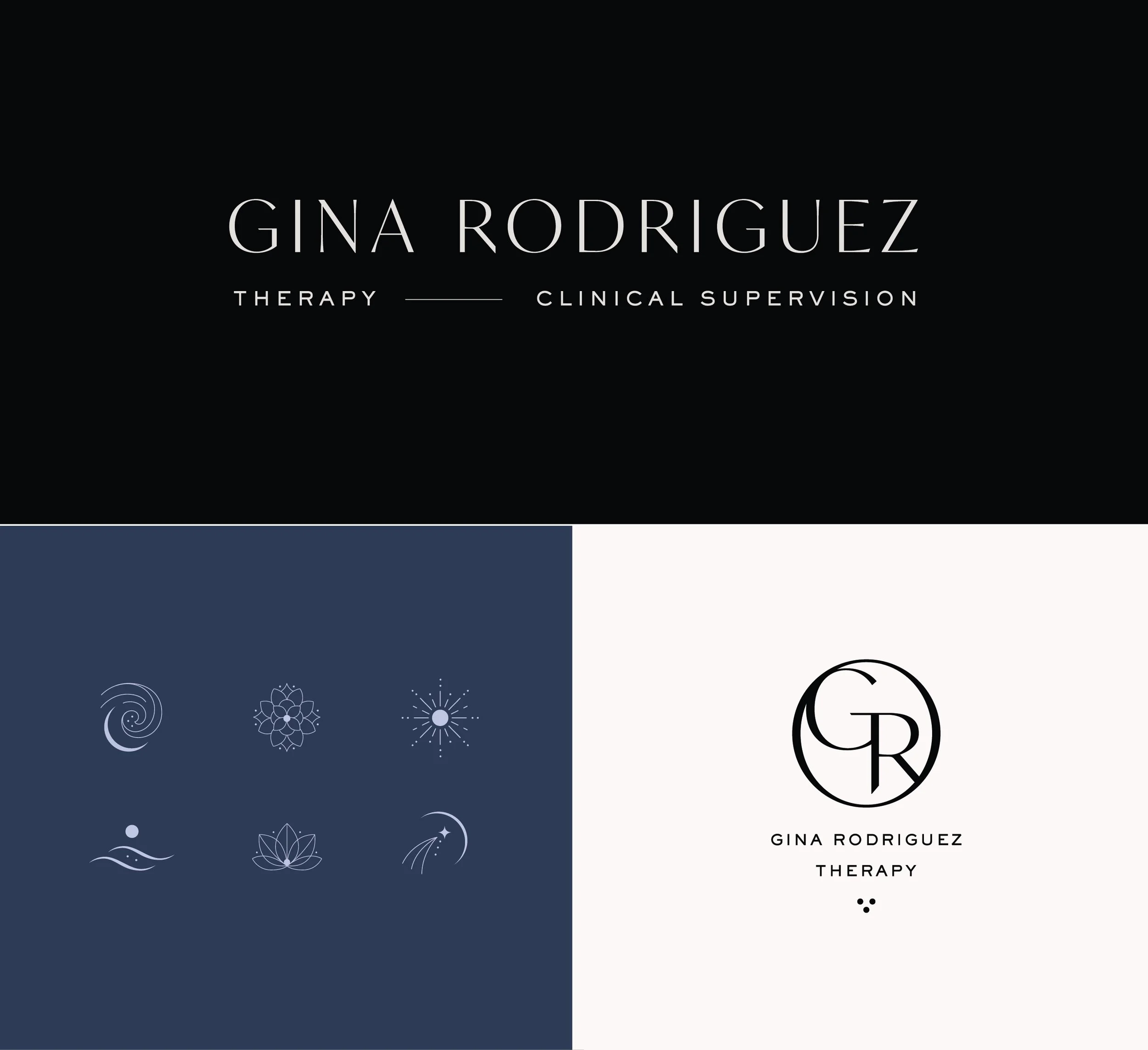
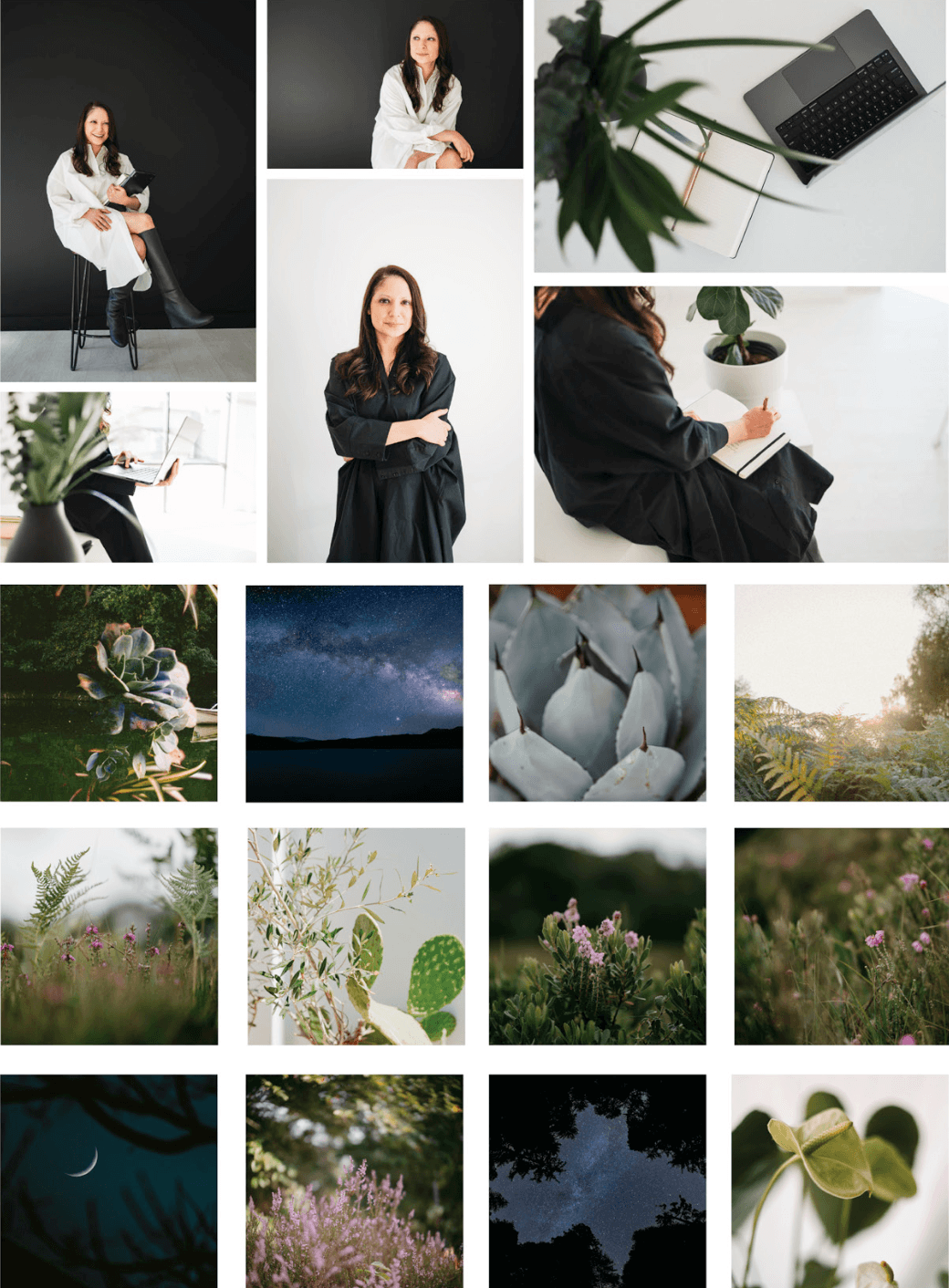
Therapist, Supervisor, located in Austin, loves black and white, doesn’t own a pair of jeans.
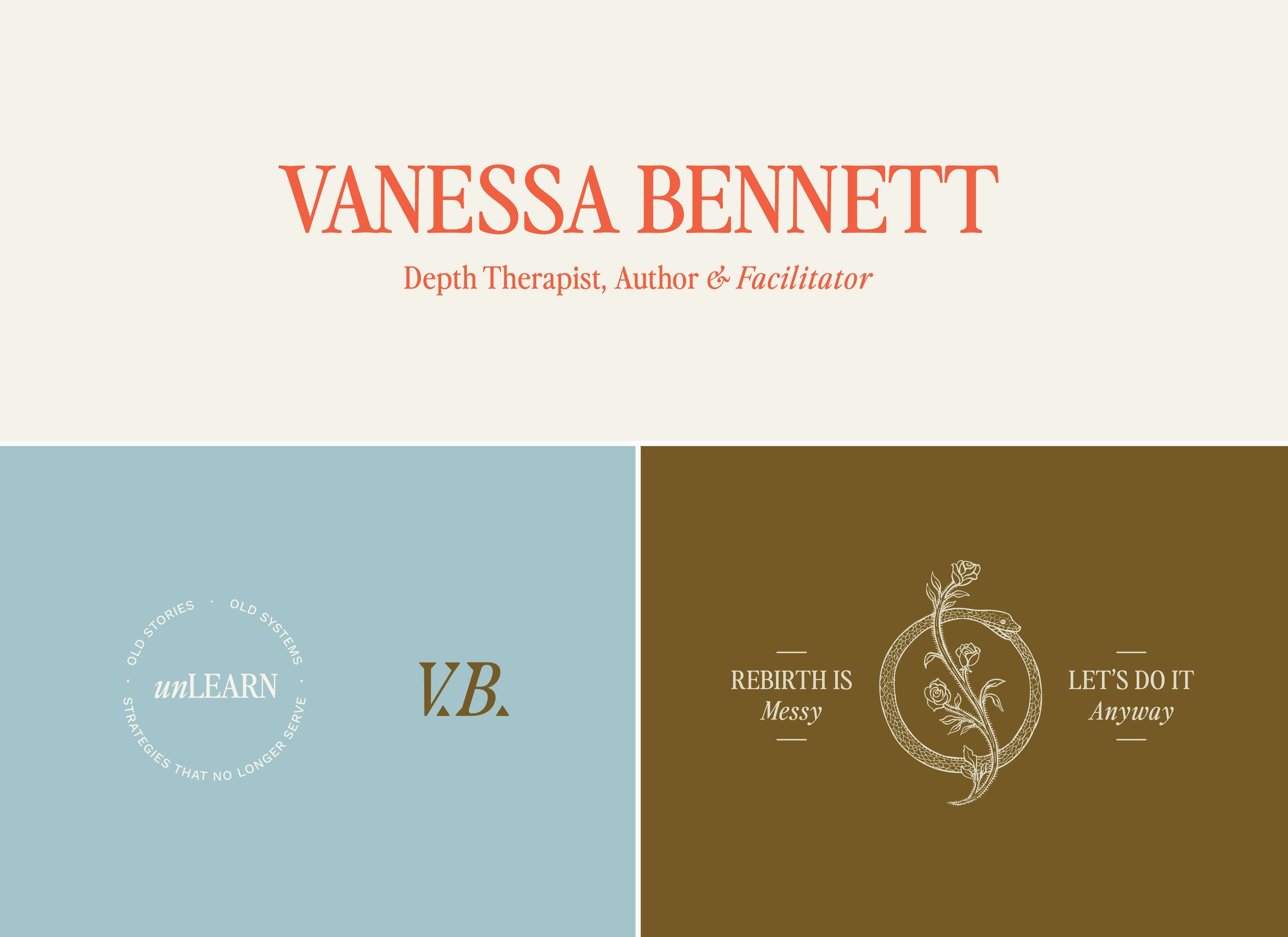
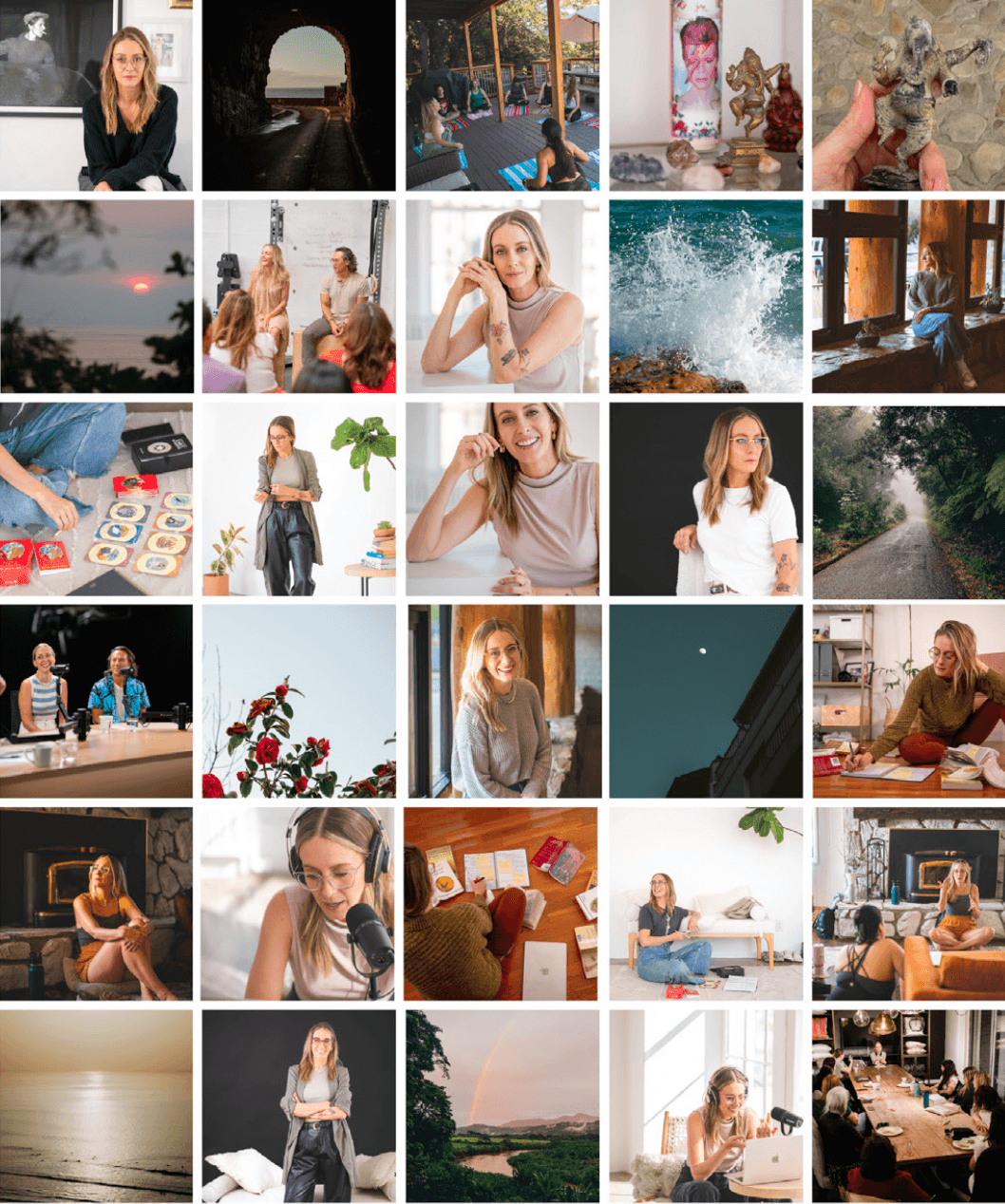
Depth Therapist, Author, Facilitator, community in LA / Costa Rica, rebirth is a huge theme (that snake is her tattoo), earthy but never afraid to be bold.
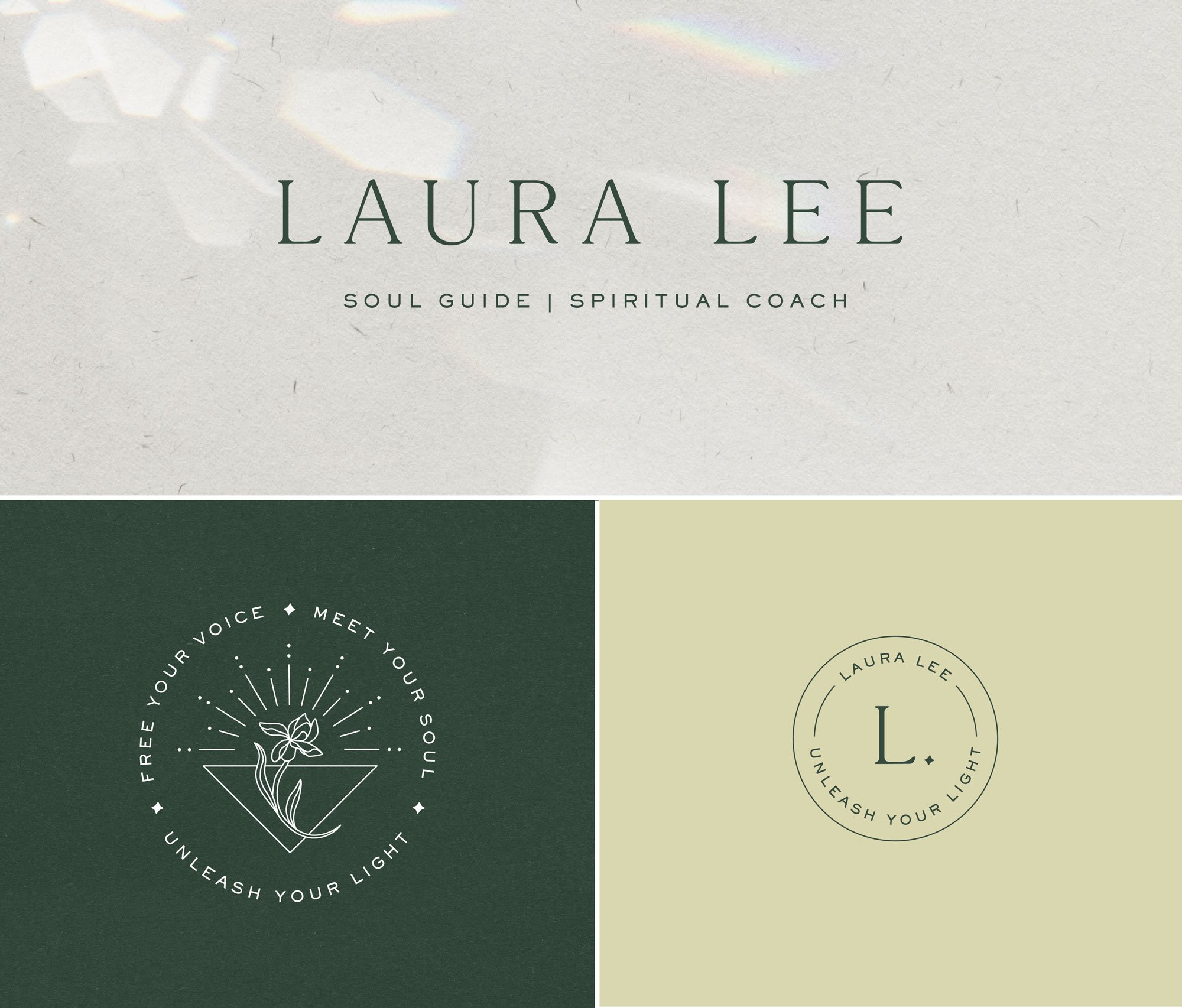
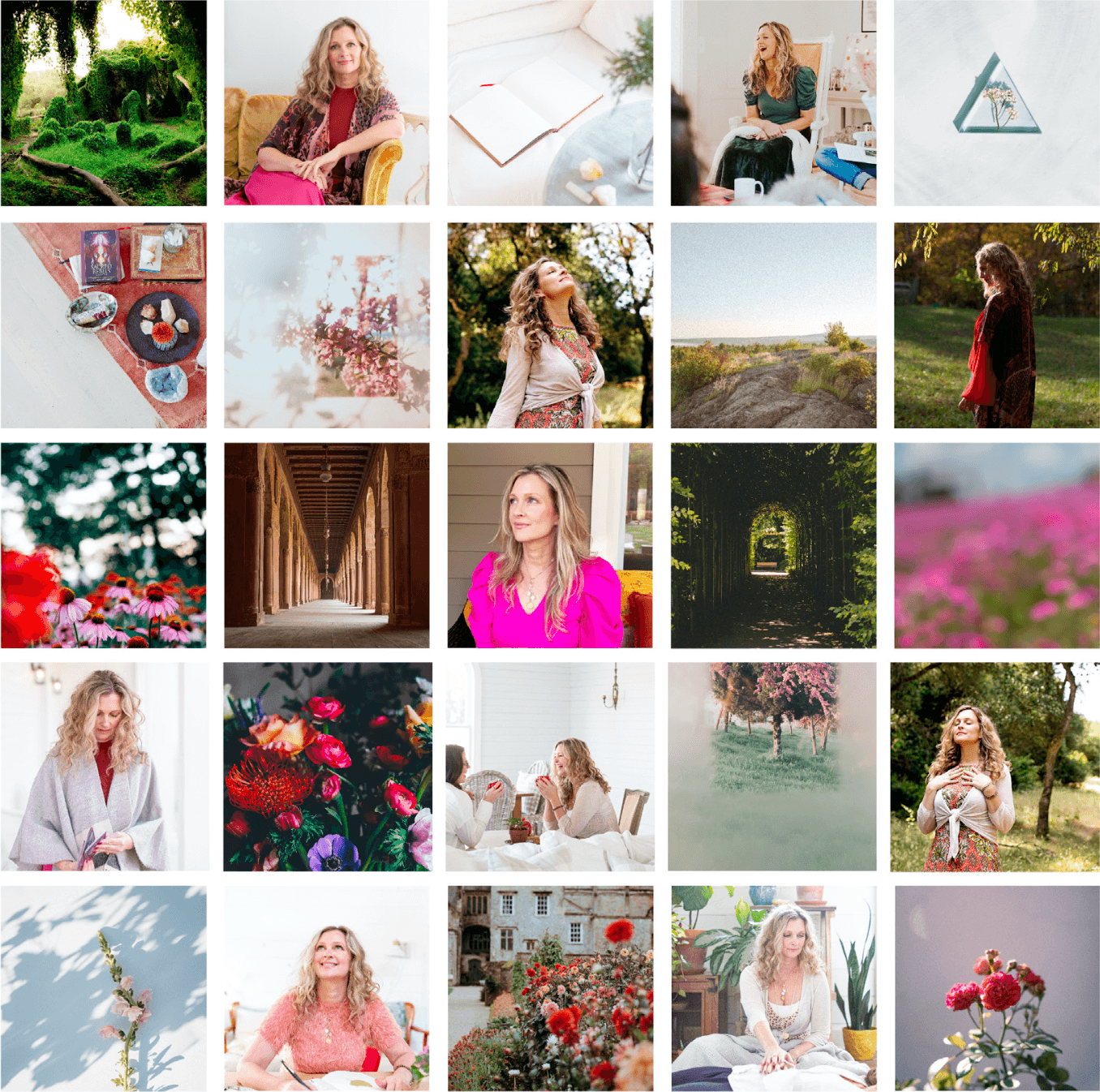
Soul Guide, a Channel, located in Tennessee, a soft whispering voice, warm, open, loves a rainbow sparkle.
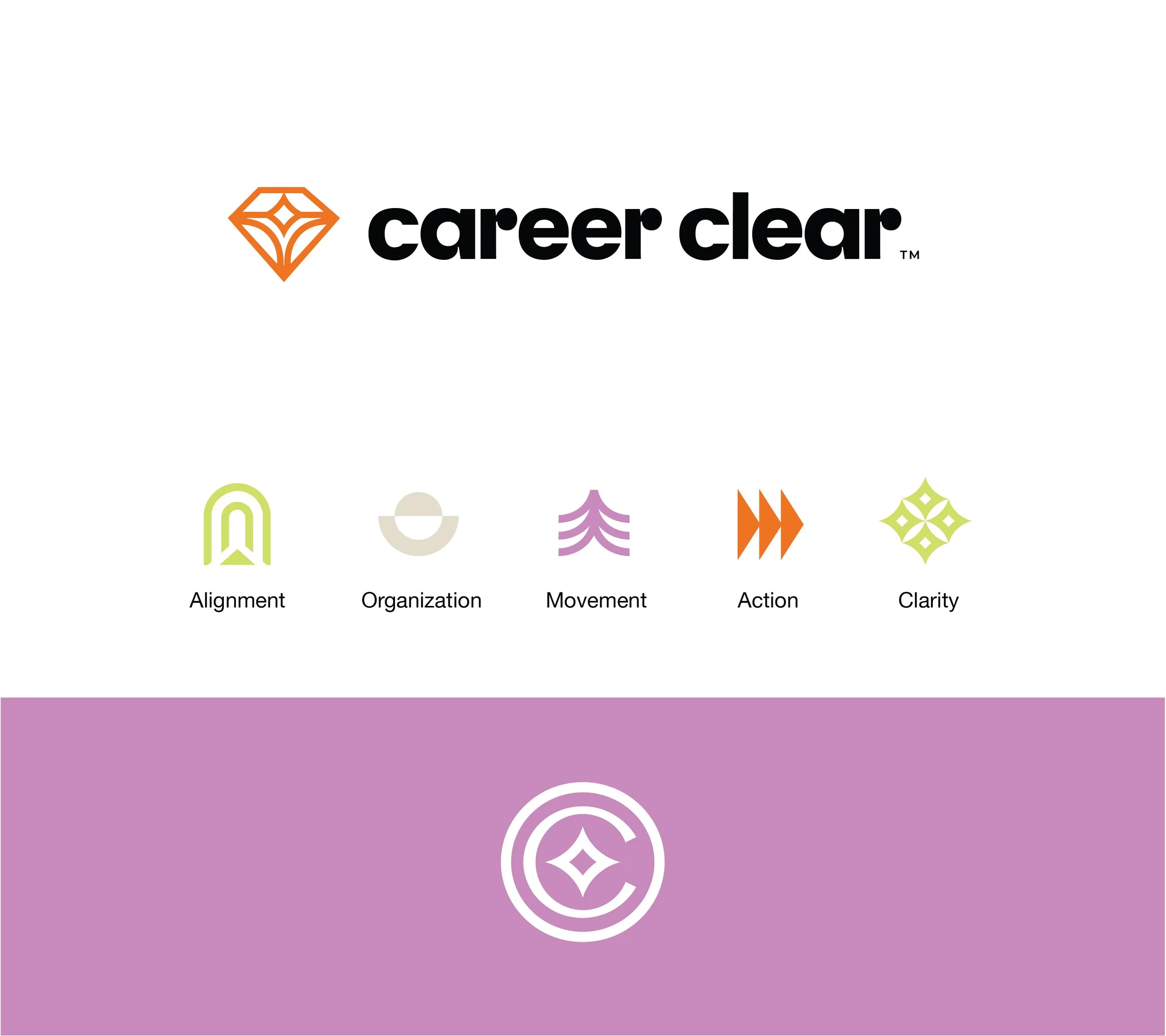

Kenda is a Career Coach, located in Atlanta, sooooooo organized (our project was always a head of schedule), polished and she loves her glam.
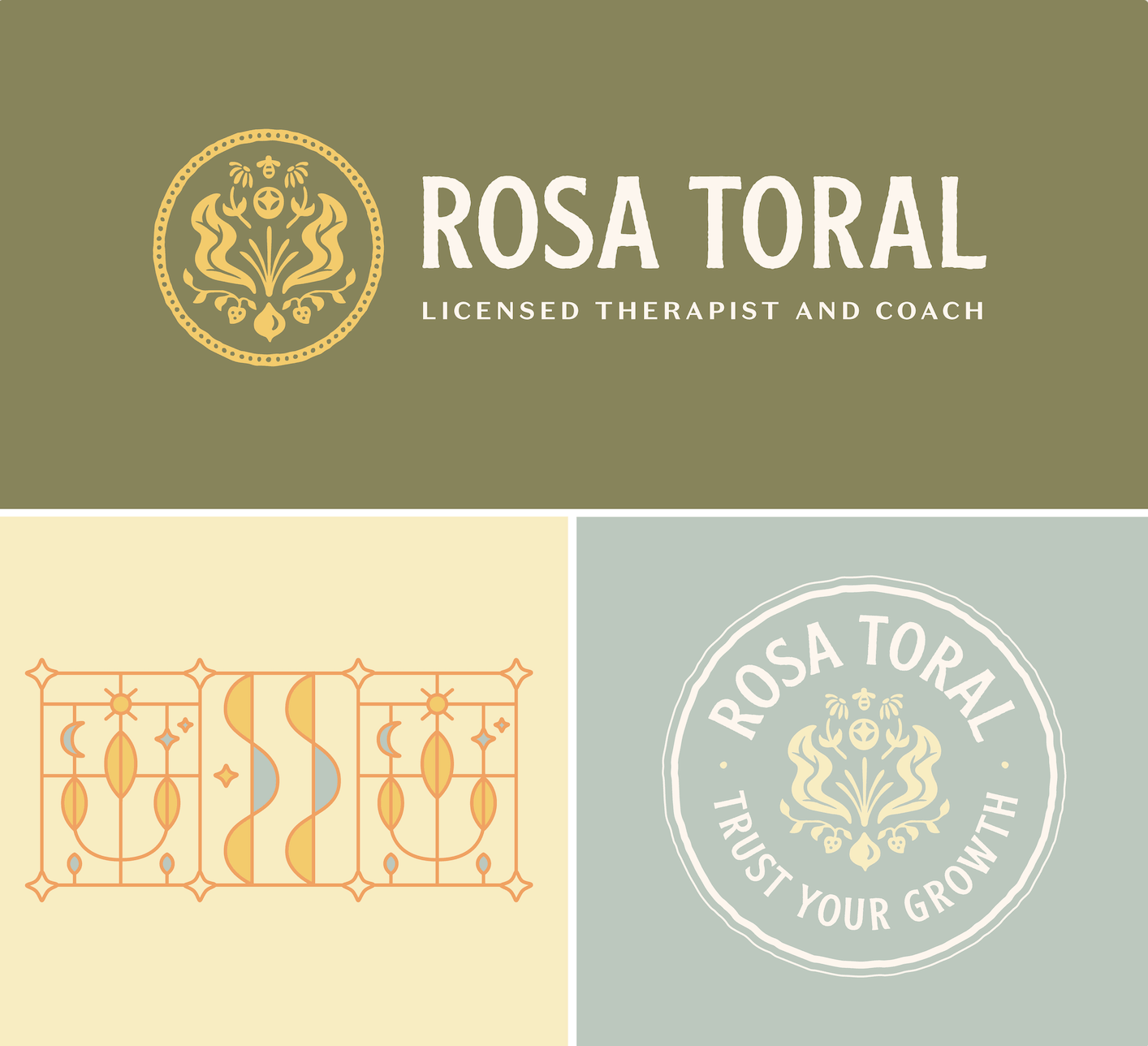

Therapist and Coach, located in Napa region in CA, would live in her garden if she could, loves astrology, so warm, the best laugh, loves yellow.
Branding: The DIY Approach:
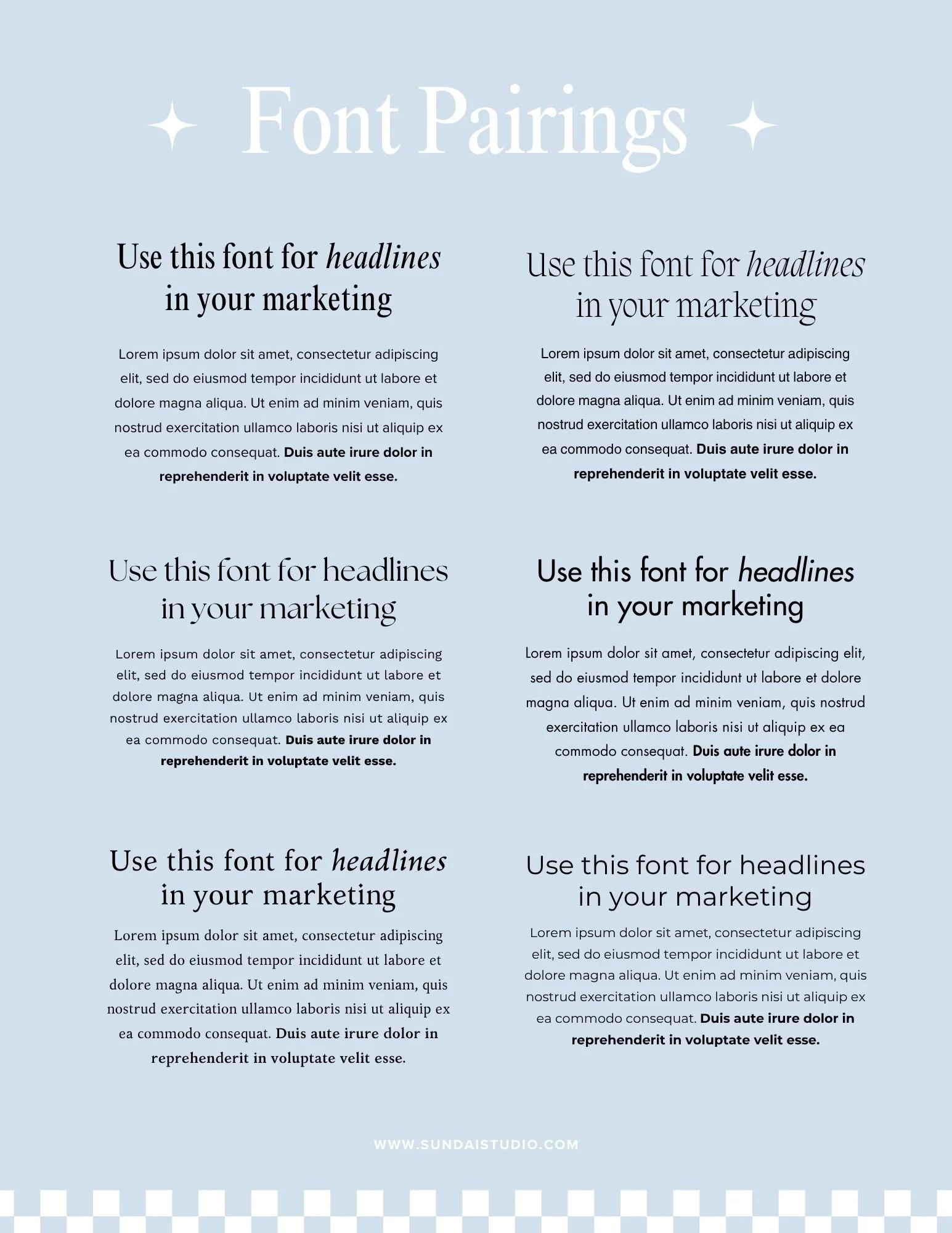
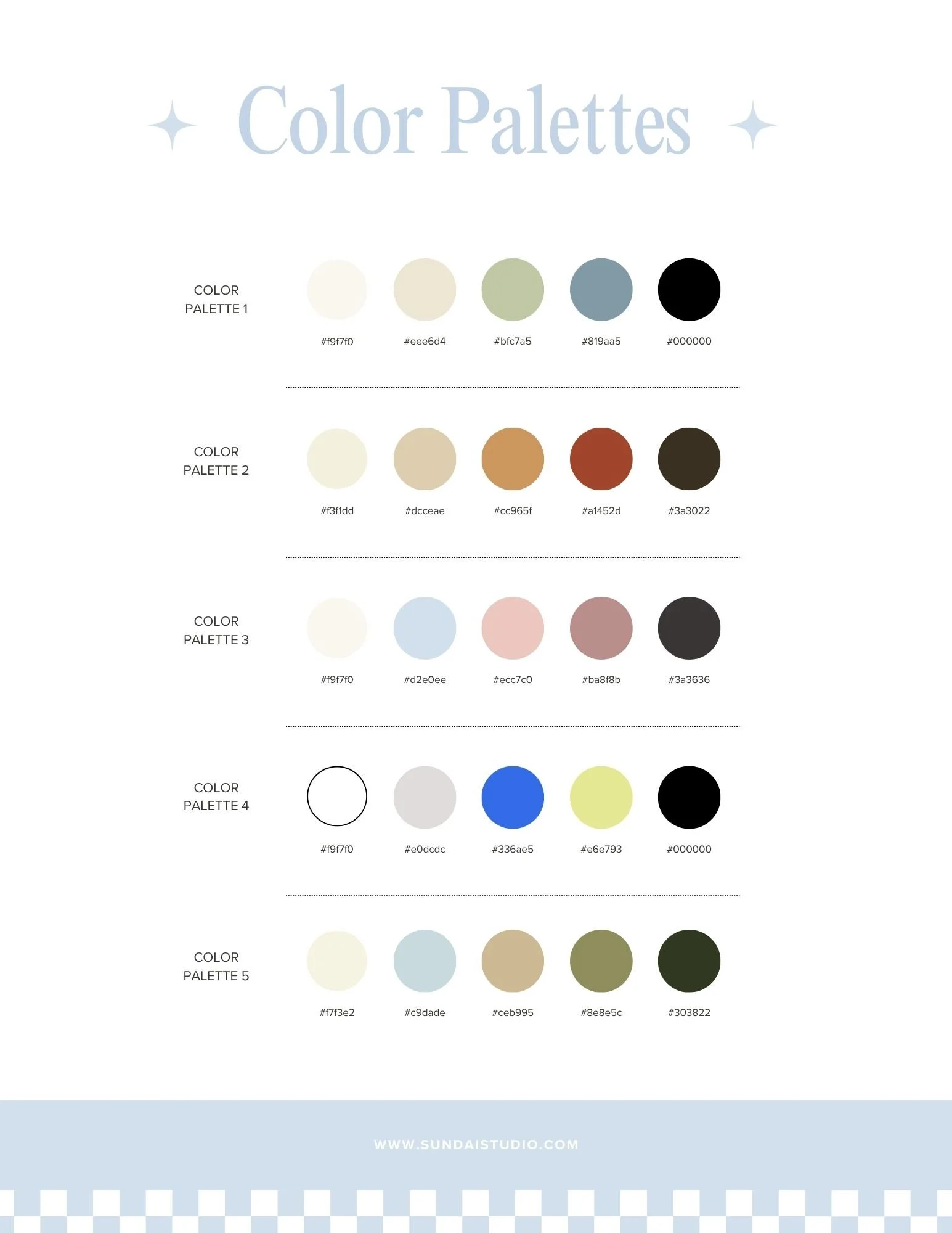
Designer approved font pairings & color combos
You can DIY a text only logo, DIY colors, fonts, imagery and copy using the free version of Canva.com
Tips for the DIY brand:
Choose a wordmark (text only) logo: Pick a font in Canva, type out your name and export PNG files.
Choose legible, designer-approved fonts for your brand fonts.
Choose a color palette that feels best to you (feel it in your body). Do you have a favorite color? Do you think of yourself as more laid back or buttoned up and polished? Light and airy or dark and bold? More feminine, masculine, gender neutral? Think about what colors you are drawn to in your home, your wardrobe. Remember, it’s less about what other coaches are doing… and more about what feels true to you. (Keep an eye out though for any direct competitors and steer clear of any signature color they are using).
Ask a friend to take photos of you, or hire a photographer. This blogpost shows some examples of photoshoots at every budget and stage of business >
Tone: Pick a few keywords that can help to ground you when writing copy/content. These are just for internal purposes.
Tips for hiring a professional designer for branding.
You want to find a design partner that matches your style and aesthetic.
Where to find them?
Referrals / your peers
Instagram search bar
Site Credits (scroll to the bottom of websites you are enjoying)
Google / AI Search
The Website Portfolio Test: Make sure you’re choosing a designer / studio that’s going to get you the result you’re looking for. Don’t ask them to go outside of their style too much, even if they say they can. Book a consult call to see if the energy matches.
Chapter 3: Marketing & Mapping Your Customer Flow Journey
A Marketing Resource: The Customer Flow Worksheet

The Customer Flow Journey worksheet activity:
Doing this before the website can be helpful as it can show you what you may need to build / create.
Walk through refining offers, selecting marketing channels that align with YOUR energy. This helps you visualize what you’re building and why your website is important. Share real case studies and examples of past clients and their anonymous Customer Flow Journeys.
Key points:
Sometimes “presence” on social media is enough. Relationships > Going Viral.
Consider all the stepping stones.
Chapter 4: The Website Phase
Now that we have our brand, and overall marketing vision we can build a website.

Q&As: The most common questions I get:
Squarespace vs Shopify vs Showit vs Wordpress etc?
Squarespace or Showit for service providers, Shopify for selling physical products, Wordpress if you want to monetize a blog. Wix, Weebly, Canva - quick DIY versions before moving to Squarespace or Showit. Most importantly, you want to find a designer experienced in that platform you choose.
Website tips for page flow?
CTA at the bottom of every page.
Should we show pricing on the website?
Yes, but it an be a price range or a starting at point if that’s what makes you more comfortable.
How do I get clients to find me through my website (SEO)?
Step 1: Build the website. Step 2: Optimize for SEO. You can DIY using this blogpost here > or reach out to my SEO mentor Brittany Herzberg - lots of DIY and done with you options.
Website Templates vs Custom Design Websites:
What is a “Website Template” and where do I find one?
Website templates are pre-built designs you purchase in order to save you time if you’re DIYing. You can choose a free Squarespace Template but you’ll need to customize it quite a bit to fit design and marketing best practices for coaches and therapists. Website Templates are designed for specific niches and needs.
The Pros & Cons of DIY: Website Templates:
Pros:
Affordable price point (typically under $400 for everything!)
Easy to customize and launch quickly (my students launch within a couple weeks on average)
Can be upgraded later with custom design
Cons:
You’ll be doing the manual work (but tutorials make it easy)
Best suited for resourceful and self-motivated business owners (it’s a self-paced experience)
The Pros and Cons of Custom Brand and Website Design:
Pros:
You get a true partner for strategy, tech, design, and flow
You feel “seen” and the website feels like you!
Full customization for your unique offers and content
Hands-off for you in terms of setup and implementation
You now have a resource you can reach out too for further design support or questions
Cons:
Custom websites require a higher financial and energetic investment. For personal brands, cost can range from $2000 - $7000. Anything larger than that is more typical for startups / larger businesses.
You’ll need time to review materials and provide assets (it often forces you to create that new freebie idea!)
The takeaway: Find a budget that feels comfortable to you. Branding can be done in phases! You just want to make sure you’re addressing all pieces of your brand. This will make marketing way easier. Here’s a deeper look at the difference between website templates vs custom design >
Tips for finding a designer for custom website design.
You want to find a design partner that matches your style and aesthetic.
Where to find them?
Referrals / your peers
Instagram search bar
Site Credits (scroll to the bottom of websites you are enjoying)
Google / AI Search
The Website Portfolio Test: Make sure you’re choosing a designer / studio that’s going to get you the result you’re looking for. Don’t ask them to go outside of their style too much, even if they say they can. This includes design AND tech (the platform they build the site in). Book a consult call to see if the energy matches.
Questions to ask during your Consult Call:
What platform do you build sites on?
How much custom code do you use? (the more hard coded websites are, the harder it will be for you to make edits to the design).
Will I be able to edit everything on my own or will I need to reach out to you to make edits?
Are you available in the future for any website needs (like new pages?). What is that cost and what is that process like?
Take action today with The Website Prep Checklist
Website Prep Checklist - This can be done on your own time but let’s talk about:
Gather Images of you: 3-4 minimum. Here’s a blogpost that walks through the different options you can take for brand photos. Check out this blogpost >
Collect 3-6 Testimonials (ask your colleagues if you don’t have client testimonials).
Think about Legal Pages (work with a lawyer if you’re uncertain - especially for therapists venturing into coaching)
Create a freebie - (Do we actually need them?! Yes.)

Chapter 5: Website Templates, Canva Templates & Custom Design from Sundai Studio
50% Off Website Templates in the Shop: with code ICA
** Designed to be used as is if you enjoy the look and feel AND everything can be customized (colors, fonts etc.)
Website Template Kits: Great starting point for beginners!
Everything you need to build your brand and website on a budget without sacrificing quality. Tailor-made for therapists and coaches:
A plug and play logo design
set of icons
color palette
brand fonts
free stock imagery
copywriting prompts
Squarespace Website Template (12+ pages)
Instagram templates created in Canva
1-time cost: $364
Use code “ICA” at checkout for: $182
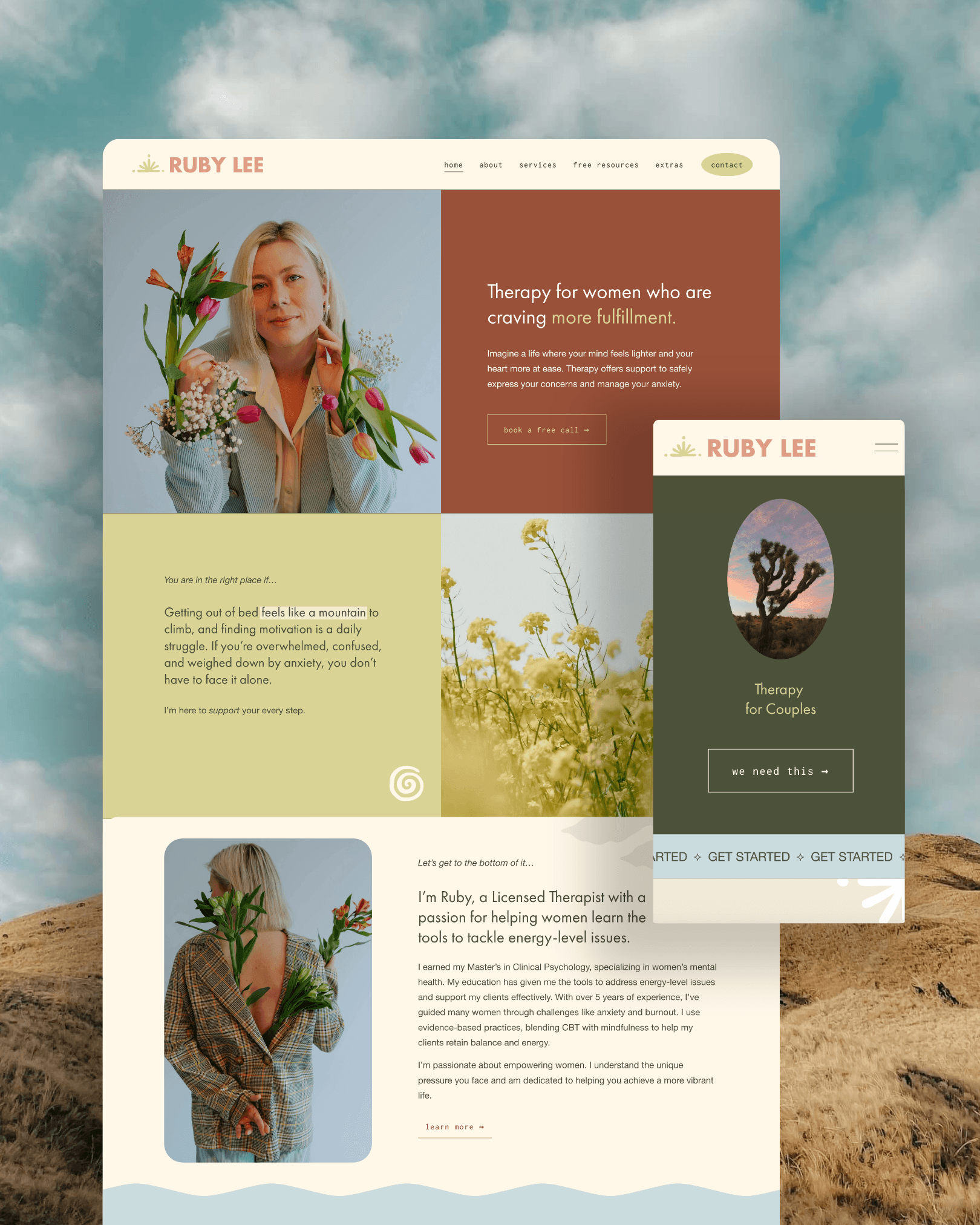
Ruby
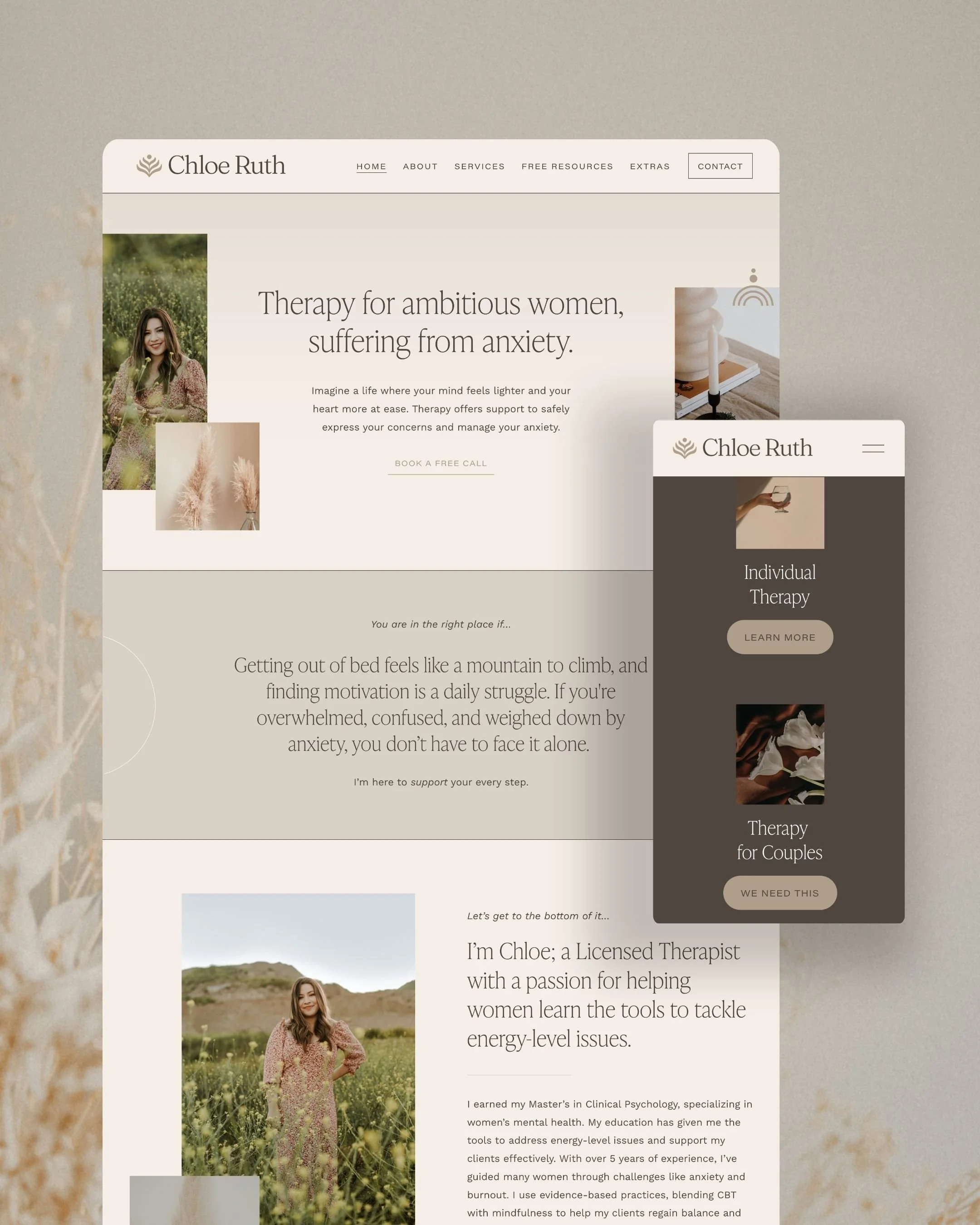
Chloe
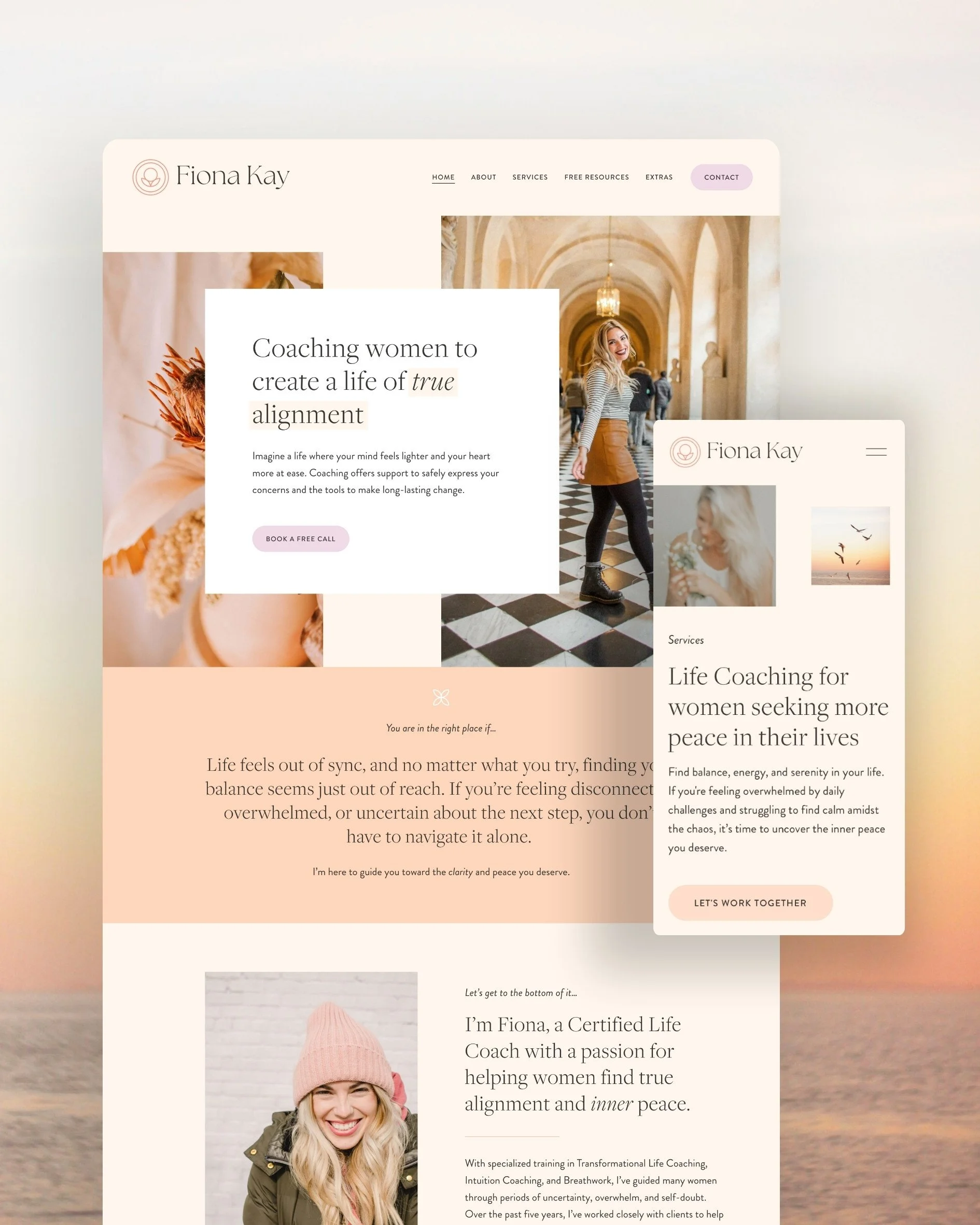
Fiona
Free Instagram “Start Here” Canva Templates:
These free Canva Template set includes a great base starting point to introduce yourself, be clear about your offers both on the grid (pinned!) and in stories.


Design Days & Custom Design Work for a more tailored brand
Design Days that can be added to those templates or you may be a better fit for custom design work.



Q&A time
Any questions? Specific issues you’re facing with your brand or website or business? I’d love to hear.
— Jena Thielges